
Loading Content...
Been there, Done that !
0.1
Bases
Autumn 1982, New York artists such as Grand Mixer D.ST, Fab 5 Freddy, Phase 2, Mr. Freeze, Dondi, Futura 2000, and Crazy Legs—just to name a few—embarked on a tour across Europe, making notable stops in Paris and Strasbourg. They left a lasting impression on the young people who welcomed them, one that extended well beyond the trip itself. They began spreading what would become the hip-hop culture—something that, as Marc-Aurèle Vecchione later pointed out, would catch on “like wildfire,” eventually spreading across the globe.
By late 1988, while some in France were preparing to celebrate “their” Revolution, and others believed that the breakdancing trend had vanished for good, teenagers from all backgrounds began forming crews. Near Lille and Maubeuge, they called themselves ATM (African Tagger Movement), while in Strasbourg, names like Bidol, KRP (Konik Rapper Posse), and MAC emerged. These groups shared a deep passion for two books that still stand today as foundational references for many Writers and Graffiti Artists.
Subway Art by Martha Cooper and Henry Chalfant, followed by Spraycan Art by the same Chalfant alongside James Prigoff, hit like a bomb. Inspired by legendary New York artists such as Lee, T-Kid, Seen, Gnome, Bio, Reas, Arab, and Shame—as well as pioneers from Paris like Bando, Mode 2, Colt from the CTK Crew, or more broadly the BBC and CP5 collectives—these two provincial crews began developing their own styles and unique visual identities.
0.2
History
Aside from encounters with some of the key figures, for Isham as well as for Mahon, it wasn’t just the books that sparked their journey—it was, even more so, the presence of a mentor who passed on the flame. In the case of the ATM crew, it was Creat who instilled this passion, and for the Konik Rapper Possee, it was Bonzer who carried the torch. It was the era of Def Jam’s early days—the New York label where Run DMC and Jam-Master Jay would prove to the world that a DJ could replace a band and still be respected as a true musician! LL Cool J, The Beastie Boys, and Public Enemy would soon follow.
Music and graffiti, constantly inspiring one another, were always at the heart of our crews. Each group had its own sound—be it rap, reggae, or alternative rock—with fusion as the founding principle (no room for posers or clowns!). It was also the era of Customed Clothes—jackets and caps personalized with the artist’s or crew’s name. Spraycan Art had become the graphic expression of a generation raised in sprawling urban zones, marked by a subtly subversive sensibility.
A few months later, Bonzer and Mahon from Strasbourg, decided to found their own crew: MACIA, born from the fusion of two groups—MAC and CIA. Distinguished by their paintings, subject matter, and unique style, the crew quickly stood out. Peest, from Toulouse, joined in 1997; a year later, Slider, Wok, and Rockse from Dresden (former East Germany) came onboard. It wasn’t until 1999, during the Caravane des Quartiers project, that Peest met Isham, who would go on to join the Macia Crew several months later.
Each of these individuals brings a unique and complementary energy, together forming the strength of the group.

Funky Mollah

Smooth Hustler

Line Master

IAC Bandits

One Man Army

Da Masta

The Last Jedi
Homeboy Slim
Robin Hood
Graphotism : the international graffiti writers publication
Graphotism : the international graffiti writers publication
Undaground couture


0.1
Macia Originals
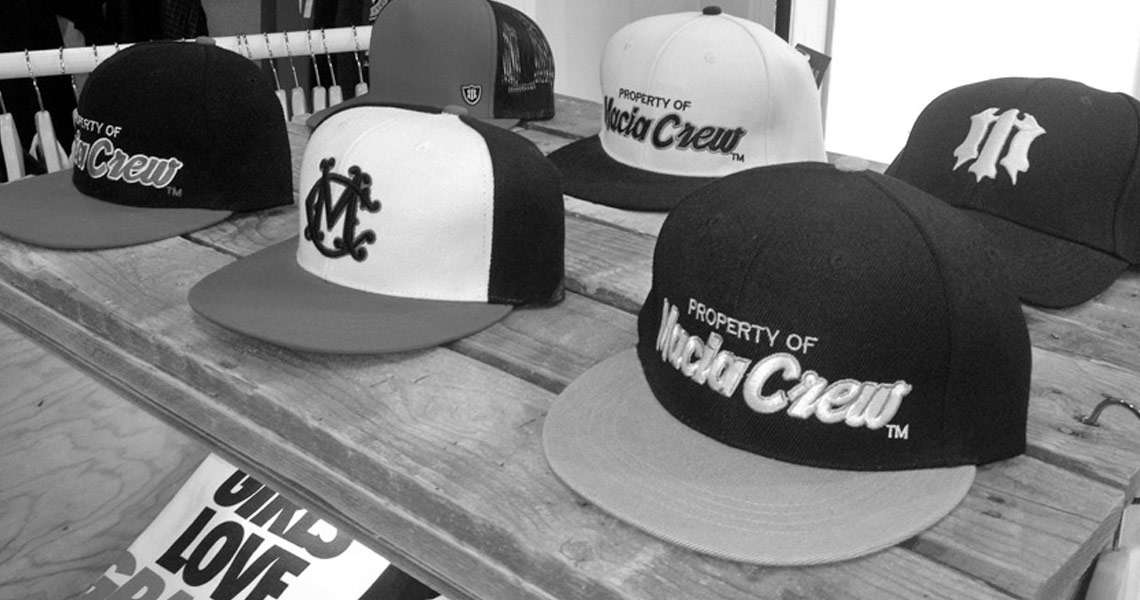
Founded in 2008 by Jamal and Mahon—two members of the Macia Crew with a shared passion for fashion and graffiti—the Macia Crew brand is a true UFO in the fashion world. Despite having no media presence, deliberately skipping fashion trade shows and trend-driven platforms, the brand’s identity is more a state of mind than a marketing concept. With its timeless gothic lettering and minimalist color palette, Macia Crew projects a bold and instantly recognizable image : subversive, singular, and unapologetically different.
Limited production runs allow the brand to focus on the quality and exclusivity of its Macia Originals collection. From design to production—with over 70% of items Made in France—the founders proudly champion the country’s textile know-how, benefiting customers and honoring a heritage of craftsmanship. In short: haute couture values applied to ready-to-wear fashion. Make no mistake—“Macia Crew may be based in the provinces, but it doesn’t follow the crowd!”
Often imitated, never ignored, Macia Crew sparks strong reactions: people either love it or hate it—but one thing is certain, they are authentic and original. Embedded in the public space like a virus—silent and invisible to outsiders, yet fully known on the international graffiti scene…



0.2
Macia Crew
With over 30 years of experience, since 1988, painting in the streets and creating Graffiti, Macia Crew has always blended classic techniques with fresh ideas. Creation has remained the group’s main driving force, alongside its cosmopolitan roots and a strong commitment to independence and self-reliance.
As a natural step in our process of formalization, we opened our first store, Macia Store in 2008, located in the very neighborhood where we grew up, near the train station in Strasbourg, Eastern France. It was the professional culmination of an artistic journey that had begun illegally on the streets three decades earlier.
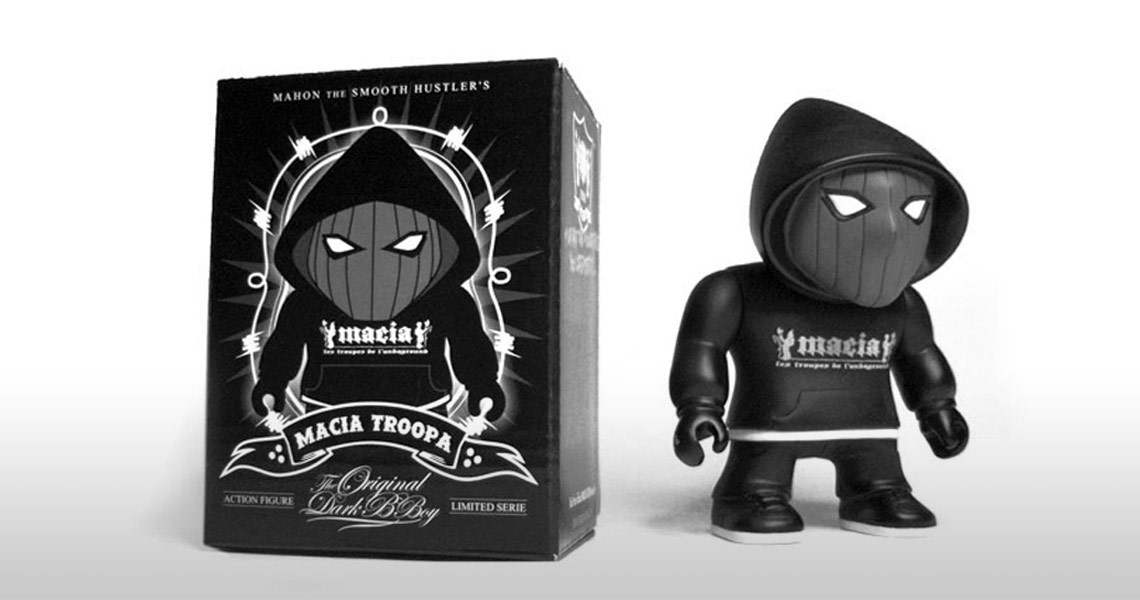
The development of textile creations and a range of limited-edition clothing and accessories allowed us to expand our universe and make it accessible to a wider audience. But it was the release of the Macia Troopa in 2008 that gave us broader recognition on the international stage.